- 10 June 24
The Power of Targeted Advertising: How to Reach the Right Audience and Boost Conversions
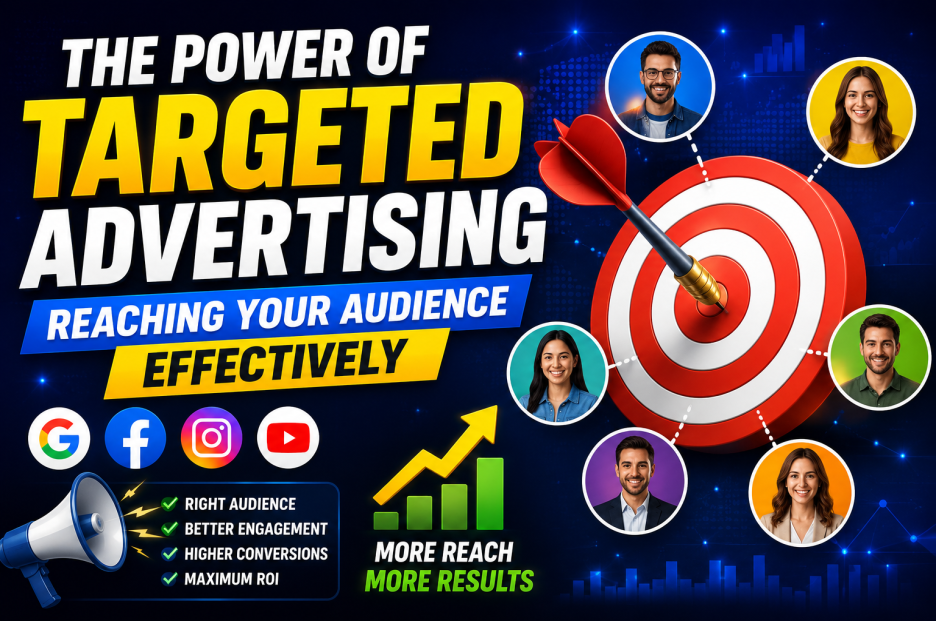
The Power of Targeted Advertising: Reaching Your Audience Effectively
Introduction
In today's highly competitive digital marketplace, businesses face a common challenge: reaching the right audience at the right time. Traditional advertising methods often cast a wide net, hoping to attract potential customers. While this approach may generate visibility, it frequently results in wasted advertising budgets and lower conversion rates.
Targeted advertising has transformed the marketing landscape by enabling businesses to deliver personalized messages to specific groups of consumers. Instead of showing advertisements to everyone, targeted advertising focuses on individuals who are most likely to be interested in a product or service.
As digital technology continues to evolve, targeted advertising has become one of the most effective strategies for increasing brand awareness, generating leads, boosting sales, and maximizing return on investment (ROI).
This article explores the power of targeted advertising, its benefits, methods, best practices, and why it remains essential for modern businesses.
What Is Targeted Advertising?
Targeted advertising is a marketing strategy that uses customer data, demographics, interests, online behavior, location, and other factors to deliver relevant advertisements to specific audiences.
Rather than promoting products to a broad audience, businesses can focus their advertising efforts on people who are more likely to engage with their brand.
For example:
A fitness company may target health-conscious individuals.
A travel agency may target users searching for vacation packages.
An online store may show ads to customers who previously visited its website.
A software company may target business professionals and entrepreneurs.
This precision helps advertisers reach potential customers more effectively while reducing wasted ad spend.
Why Targeted Advertising Matters
Consumers today are exposed to thousands of advertisements every day. As a result, generic marketing messages often get ignored.
Targeted advertising solves this problem by delivering relevant content that aligns with user interests and needs.
Key reasons targeted advertising matters include:
Improved Relevance
People are more likely to engage with advertisements that relate directly to their interests.
Relevant ads create better user experiences and increase engagement rates.
Higher Conversion Rates
When businesses target the right audience, they attract users who already have an interest in their products or services.
This often leads to:
More clicks
More leads
More purchases
Better customer retention
Better Use of Marketing Budget
Targeted advertising reduces wasted spending by focusing only on potential customers.
Instead of paying to reach everyone, businesses invest in reaching qualified prospects.
Enhanced Customer Experience
Consumers appreciate advertisements that offer value and relevance.
Personalized advertising can help users discover products and services that genuinely meet their needs.
Types of Targeted Advertising
Modern advertising platforms offer various targeting options.
Demographic Targeting
Demographic targeting focuses on audience characteristics such as:
Age
Gender
Income
Education
Occupation
Marital status
This helps businesses tailor messages to specific consumer groups.
Geographic Targeting
Location-based advertising targets users based on their geographic location.
Businesses can reach audiences in:
Cities
Regions
Countries
Neighborhoods
This strategy is especially useful for local businesses and service providers.
Behavioral Targeting
Behavioral targeting uses online activity to identify consumer interests.
Examples include:
Websites visited
Products viewed
Search history
Previous purchases
This data helps advertisers show highly relevant ads.
Interest-Based Targeting
Advertising platforms analyze user behavior to determine interests.
For example:
Technology enthusiasts
Sports fans
Travelers
Gamers
Food lovers
Businesses can target audiences that align with their products.
Retargeting
Retargeting is one of the most powerful forms of targeted advertising.
It allows businesses to reconnect with users who have already interacted with their website or brand.
For example:
A user visits an online store.
They leave without making a purchase.
Later, they see ads promoting the products they viewed.
This strategy often delivers exceptional conversion rates.
Benefits of Targeted Advertising
Increased Brand Awareness
Targeted campaigns ensure your brand reaches relevant audiences consistently.
Repeated exposure helps build recognition and trust.
Higher Engagement
Relevant advertisements encourage:
Clicks
Shares
Comments
Website visits
This creates stronger relationships between brands and consumers.
Improved Return on Investment
Since ads are shown to interested audiences, businesses often achieve better results from their marketing budgets.
Higher conversion rates lead to stronger ROI.
Better Customer Insights
Advertising platforms provide valuable analytics.
Businesses can learn:
Who their customers are
What interests them
Which ads perform best
How audiences interact with content
These insights help improve future campaigns.
Competitive Advantage
Companies that use targeted advertising effectively often outperform competitors relying on traditional marketing methods.
Precision targeting allows businesses to connect with consumers more efficiently.
Popular Platforms for Targeted Advertising
Google Ads
Google Ads allows businesses to target users based on:
Search queries
Interests
Location
Device usage
Website visits
This makes it one of the most powerful advertising platforms available.
Facebook Advertising
Facebook provides detailed audience targeting options including:
Demographics
Interests
Behaviors
Custom audiences
Lookalike audiences
Its extensive user data enables highly effective campaigns.
Instagram Advertising
Instagram is ideal for visually appealing brands.
Businesses can target users through:
Stories
Reels
Feed posts
Explore pages
YouTube Advertising
Video advertising continues to grow rapidly.
YouTube enables advertisers to target viewers based on:
Search behavior
Viewing history
Interests
Demographics
LinkedIn Advertising
LinkedIn is particularly valuable for B2B marketing.
Businesses can target professionals based on:
Industry
Job title
Company size
Skills
Professional interests
Best Practices for Effective Targeted Advertising
Know Your Audience
Understanding your ideal customer is the foundation of successful advertising.
Create detailed customer personas that include:
Goals
Challenges
Interests
Buying behavior
Use Quality Data
Accurate audience data improves targeting precision and campaign performance.
Create Personalized Messages
Tailor your advertising content to audience needs and interests.
Personalization significantly increases engagement.
Test Multiple Campaigns
A/B testing helps identify:
Effective headlines
Ad creatives
Calls-to-action
Audience segments
Continuous testing improves performance over time.
Monitor Analytics
Track important metrics such as:
Click-through rate (CTR)
Conversion rate
Cost per acquisition (CPA)
Return on ad spend (ROAS)
Use data to refine campaigns.
The Future of Targeted Advertising
Artificial intelligence and machine learning are transforming targeted advertising.
Future advancements will provide:
More accurate audience segmentation
Predictive customer behavior analysis
Real-time optimization
Enhanced personalization
As technology evolves, businesses that embrace data-driven advertising strategies will continue to gain a competitive advantage.
Conclusion
Targeted advertising has become an essential component of successful digital marketing. By reaching the right audience with relevant messages, businesses can increase engagement, improve conversions, maximize advertising budgets, and build stronger customer relationships.
In a world where consumers are constantly bombarded with information, relevance is the key to success. Targeted advertising allows brands to cut through the noise and connect with people who are genuinely interested in their products and services.
Whether you're a small business, growing startup, or large enterprise, investing in targeted advertising can help you reach your audience more effectively and achieve long-term marketing success.
The future of advertising belongs to businesses that understand their customers and deliver personalized experiences. Targeted advertising makes that possible.