- 15 June 26
The Future of Publishing in the AI Era: 5 Strategies to Build a Profitable Website
The Future of Publishing: How Smart Creators Will Thrive in the AI Era
The digital publishing landscape is evolving faster than ever before. Search engines are changing, artificial intelligence is transforming how people find information, and advertisers are becoming increasingly selective about where they invest their budgets.
For many publishers, traffic patterns that once felt predictable now seem uncertain. Platforms that once delivered massive audiences are keeping users within their own ecosystems, making it harder to attract visitors to independent websites.
Yet this is not the end of publishing. It is the beginning of a new era.
The publishers who succeed over the next decade will not be the ones chasing every algorithm update or looking for quick SEO tricks. They will be the creators who focus on building authority, earning trust, owning their audience, and creating experiences that AI cannot easily replicate.
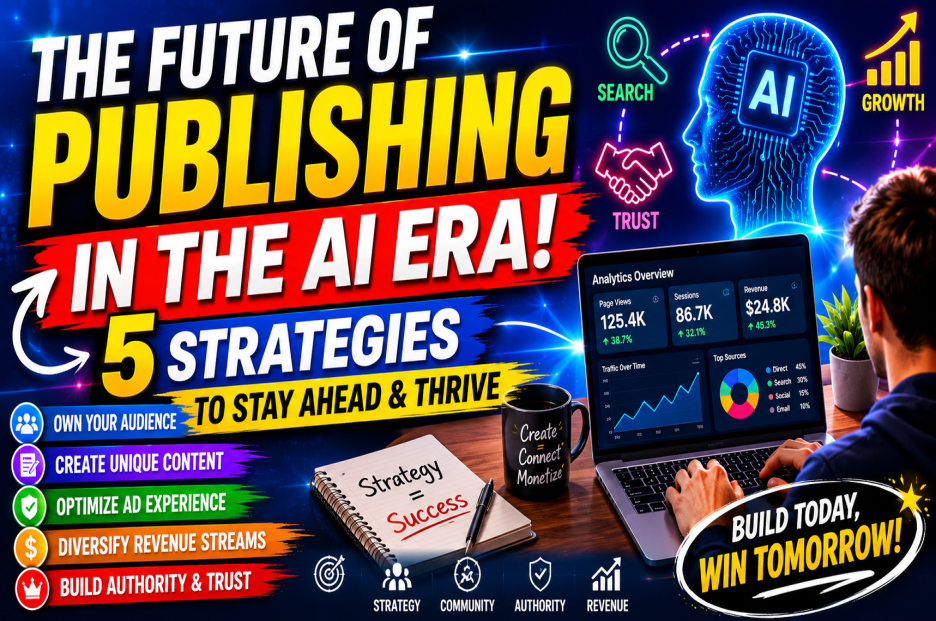
Here are five strategies that will help publishers build sustainable, profitable businesses in the years ahead.
1. Create Content That AI Cannot Replicate
Artificial intelligence has become remarkably good at answering simple questions.
Need a definition? AI can provide it instantly.
Need a quick summary? AI can generate one in seconds.
Need a basic list of tips? AI can produce hundreds.
This means content designed solely to answer simple questions is becoming less valuable. Users increasingly receive those answers directly from AI-powered search experiences without ever visiting a website.
However, there are things AI still struggles to replicate:
Real-world experience
Personal insight
Expert judgment
Original research
Strong opinions
Authentic storytelling
These are the elements that make content memorable and valuable.
Instead of asking, "What information can I publish?" start asking, "What perspective can I offer?"
The most successful publishers are moving beyond surface-level content and creating resources that explain not only what happened but also why it matters.
Action Steps
Audit existing content for originality.
Remove thin, generic, or repetitive articles.
Add personal experience and case studies.
Focus on solving deeper audience problems.
Create content that sparks curiosity and encourages further exploration.
The future belongs to publishers who provide insight, not just information.
2. Build an Audience You Actually Own
One of the biggest mistakes publishers make is relying entirely on traffic sources they do not control.
Google can change.
Facebook can change.
Instagram can change.
TikTok can change.
Every platform eventually changes its algorithm, and when it does, publishers often suffer.
The most valuable asset a publisher can build is an audience relationship that exists independently of any platform.
Owned audiences include:
Email subscribers
Registered users
Community members
Direct visitors
Returning readers
These people actively choose to engage with your content.
That choice creates something incredibly valuable: trust.
Advertisers love trusted audiences because loyal readers are more engaged, spend more time on site, and are more likely to convert.
Action Steps
Grow your email newsletter aggressively.
Encourage repeat visits.
Create exclusive content for subscribers.
Build communities around shared interests.
Treat your website as a destination, not just a traffic source.
Traffic can disappear overnight.
Audience loyalty can last for years.
3. Improve User Experience and Ad Quality
Many publishers make the mistake of maximizing ad quantity rather than maximizing user value.
While stuffing pages with advertisements may increase short-term earnings, it often damages long-term growth.
Visitors become frustrated.
Engagement declines.
Advertisers lose confidence.
Premium advertising budgets increasingly flow toward websites that provide clean, high-quality experiences.
Today's advertisers want:
Better visibility
Higher engagement
Stronger brand safety
Premium content environments
Publishers who prioritize user experience often benefit from stronger advertiser demand and more sustainable revenue.
Action Steps
Reduce unnecessary ad clutter.
Improve website speed.
Focus on viewability.
Create premium content environments.
Balance monetization with user satisfaction.
In modern publishing, quality almost always outperforms quantity.
4. Diversify Revenue Streams Without Abandoning Advertising
Advertising remains one of the most powerful monetization methods available to publishers.
However, depending entirely on one revenue source creates risk.
Successful digital businesses build multiple income streams around a central brand.
Advertising should remain an important pillar, but it should not be the only one.
Additional revenue opportunities may include:
Digital Products
eBooks
Templates
Guides
Courses
Membership Programs
Offer premium content, exclusive insights, or private communities.
Affiliate Marketing
Recommend trusted products and earn commissions from qualified referrals.
Consulting and Services
Turn expertise into professional services.
Educational Content
Online training and coaching continue to experience strong growth across many industries.
Action Steps
Identify audience pain points.
Create products that solve specific problems.
Use your website as the central hub for all offerings.
Develop multiple revenue channels over time.
Diversification creates stability during market fluctuations.
5. Build Authority Before Everyone Else Does
Authority is becoming one of the most valuable currencies on the internet.
Search engines evaluate it.
AI systems learn from it.
Advertisers invest in it.
Readers trust it.
The future will increasingly reward publishers who become recognized experts within their niche.
Instead of trying to appeal to everyone, focus on becoming indispensable to a specific audience.
Ask yourself:
What am I known for?
What expertise do I provide?
Why should readers trust my content?
What unique perspective do I bring?
Strong authority creates a competitive advantage that is difficult for AI-generated content to replace.
Action Steps
Publish consistently within your niche.
Share original insights.
Develop a recognizable brand voice.
Showcase expertise and credentials.
Build credibility through transparency and accuracy.
Authority compounds over time.
The sooner you start building it, the stronger your position becomes.
The New Reality of Digital Publishing
The internet is not dying.
Publishing is not disappearing.
SEO is not dead.
What is changing is the definition of value.
For years, scale alone drove growth.
Today, trust drives growth.
For years, publishers focused on attracting visitors.
Today, successful publishers focus on retaining them.
For years, content quantity often won.
Today, content quality wins.
Artificial intelligence is accelerating these shifts, but it is not causing them.
The publishers who embrace expertise, audience ownership, premium experiences, and authentic relationships will emerge stronger than ever.
Frequently Asked Questions
Is SEO Still Important?
Absolutely.
SEO remains a major source of traffic, but it should be viewed as one part of a broader audience-building strategy rather than the entire business model.
Will AI Replace Content Creators?
AI can automate basic information delivery, but it cannot replace authentic expertise, personal experience, creativity, and human trust.
Should Publishers Stop Using Display Ads?
No.
Display advertising remains an important revenue source. The goal is improving ad quality and user experience rather than abandoning advertising altogether.
Are Email Newsletters More Important Than Ever?
Yes.
Newsletters help publishers build direct relationships and generate repeat traffic that is independent of search engines and social platforms.
What Matters Most Going Forward?
Trust.
Publishers that earn audience trust, demonstrate expertise, and deliver consistent value will have the strongest competitive advantage.
Can Small Publishers Still Succeed?
Definitely.
Many smaller publishers are better positioned than large media companies because they often have stronger communities, clearer expertise, and deeper audience relationships.
Final Thoughts
The next generation of publishing will not be won by shortcuts, hacks, or algorithm chasing.
It will be won by publishers who create exceptional content, build loyal audiences, strengthen their authority, and maintain control over their digital assets.
Technology will continue to evolve.
Algorithms will continue to change.
Platforms will continue to shift.
But trust, expertise, and audience relationships will remain valuable for years to come.
Focus on those foundations today, and your publishing business will be positioned to thrive regardless of what changes tomorrow.